
Nothing is Obsolete Anymore

Another successful Saturday putter, adding some very 2026 features to some very old hardware. The combination of Claude Code and open source brings 'dead' devices back to life...
From 2012 - 2014 I ran MooresCloud, a startup designing and manufacturing internet connected lighting. Our first product, "Holiday", sold in a run of around 500 units to folks in Australia and America - many of whom still have them.
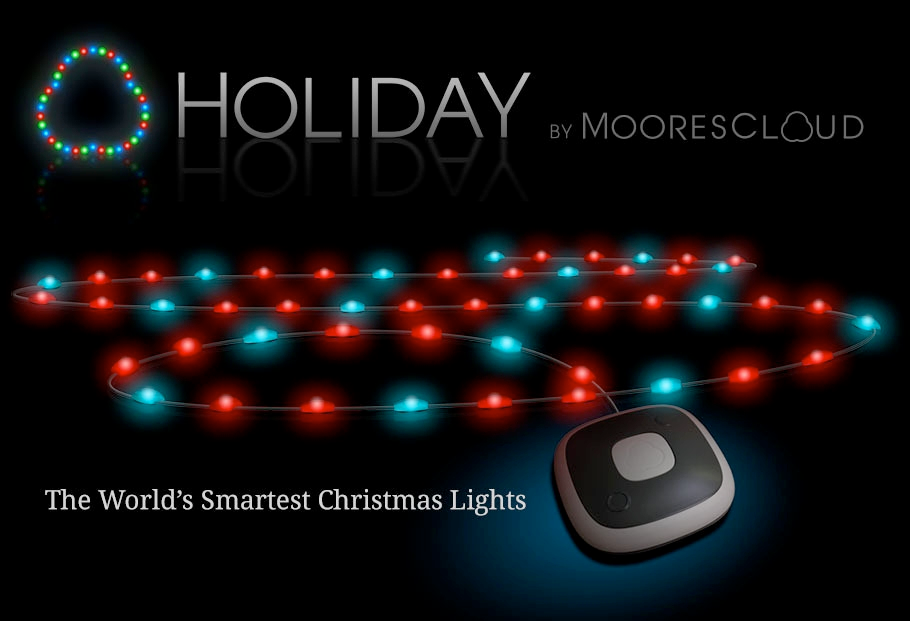
The hardware - designed by the amazingly talented Kean Maizels - has proven to be durable beyond all expectation. After designing the hardware he built an ARCH Linux kernel. So these devices run full LINUX on them, with all that implies - shell, ssh, Python, services, Wifi, the works.
Incredibly impressive for what was just a few dollars worth of components.
On top of that powerful foundation, I wrote the software to control the Holiday; IOTAS and RESTful endpoints talking to a Web app designed by Paul Bridgestock. All of it designed to be resilient and easy to use. It still seems to work well even on smartphones that are more than a decade older than the devices themselves.
After last weekend's experiments with ESP32 'Self-aware Squares' I wondered if it might be possible to get agents running on the Holiday - so I put it to Claude Code. It logged into the device, had a look around, and pronounced it absolutely doable.
Within a few minutes I had an agent, running in the terminal. "Turn the lights red", I would type, and they would.
Now I should note there's no AI running on the Holidays themselves; they don't have anywhere near the kind of computing capability for that. Instead - as with zClaw - the agent leverages Ollama, connecting to the cloud to use the very good GLM-5.1 language model. That gives the Holiday the smarts it needs.
And because that worked so well, I got needy. "Can we turn this into a system service accessible over Telegram?" I asked Claude Code. That way the agent would be always-on, and always availble anywhere via the Telegram app. Pretty cool, right?
Claude said....well, actually this is a very old version of Linux. I don't know if it's possible, but we'll have a go. What followed was six hours of Claude methodically exploring the space of 'backporting' the tools needed to allow a 2013-designed bit of hardware & software to integrate with a modern messaging platform.
The sticking point came down to cryptography. Telegram uses the latest-and-greatest cryptographic algorithms that demand a lot of compute capability. The first version that Claude got up and running took over five minutes to set up a secure web connection.
That won't work, Claude said, and gave me several alternatives - all of which would have shifted the communication burden off the Holiday. But I wanted it all to run on the Holiday.
So I asked Claude if there wasn't some software available somewhere that could speed up the cryptographic calculations? Within seconds Claude had found just the thing - and a few minutes later I was talking to my Holiday agent over Telegram!
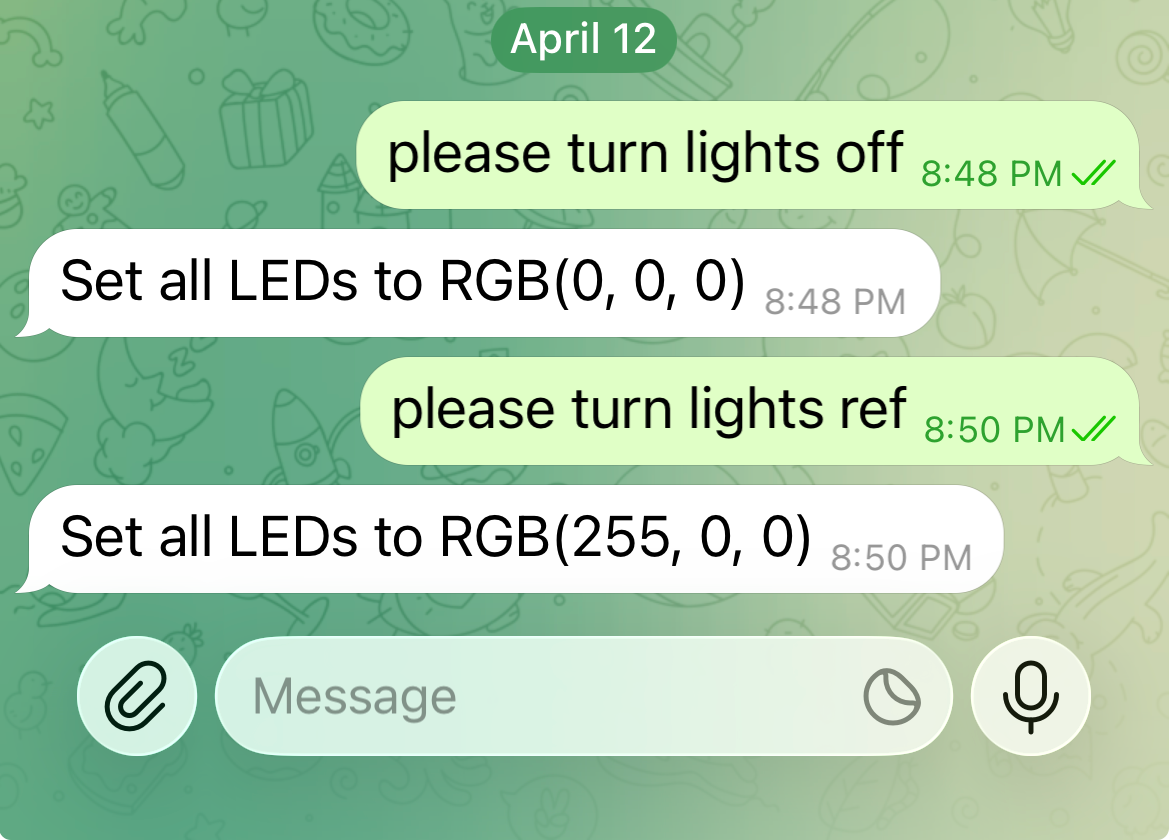
Score one for puny human brains.
Once Claude got that installed and working, I had it install a similar agent on the "Lights" that I also have. Only six of these were manufactured - prototypes designed on the way to Holiday - and again, built so well that I've had them running, full-time, for the last thirteen years, with no problems.
Claude very quickly adapted the holiday agent for the lights - now all of my Holidays and all of my Lights have agents on them, accessible from anywhere.
As we finished up our work, I realised something else: using Claude Code means that almost any "open enough" hardware, no matter how obsolete, can be brought back into usability. All of the hard, fiddly work reconfiguring an ancient PC or Mac can be done by Claude. Tell it what to do, and it'll do that for you.
It's remarkable - and it points to another thing sure to be coming: every piece of hardware 'smart enough' to support an agent will have one. Taking care of maintanence and upgrades, helping with configuration, making using it easy.
Within a few years we'll wonder how we ever did without them.
"please turn the lights blue!"