
Semiconductors and Data Centres
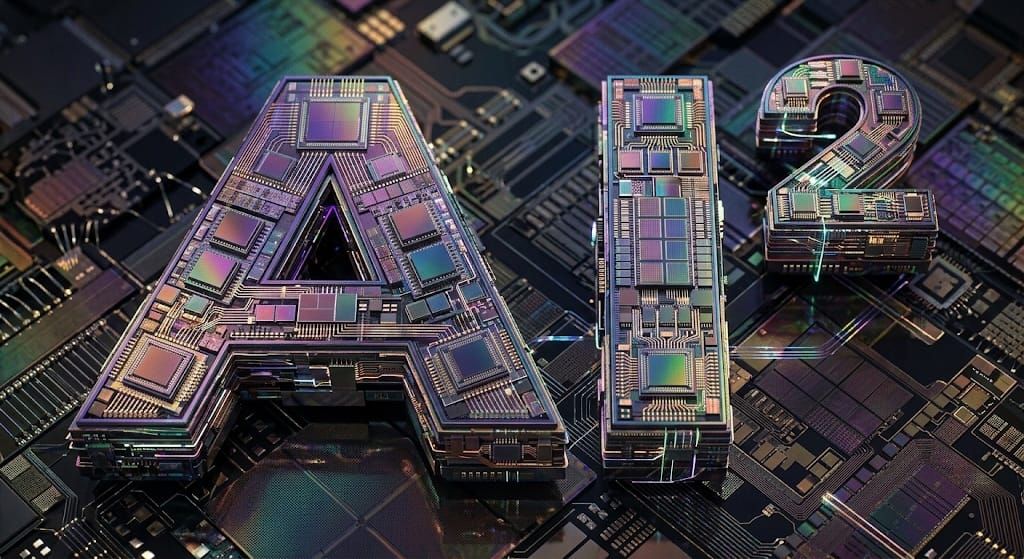
The difference between a single chip and a data centre is scale.
The semiconductor fabricator - and there is only one, as we'll explore below - prints a chip with tens to hundreds of separate dies on its wafer, then saws them apart, only to pass them along into a vast apparatus of manufacturers who put them back together again with interconnects, power, cooling, and so forth, to reach data centre scale.
At this level of the stack - where the vast majority of the $11,000,000,000,000 is being allocated - there are five companies of significance, and they'll be a central focus at Noops Research's AI Investor event:
- Taiwan Semiconductor Manufacturing Corporation (TSMC)
- Advanced Semiconductor Materials Lithography (ASML)
- SK hynix
- Samsung Electronics
- Micron Technology
If you scanned this list expecting to find NVIDIA, the world's most valuable company, we need to explain why they're not in this list.
They're not on this list because they're not in control.
Everything Nvidia sells is entirely controlled by the output of these five firms.
All of Nvidia's chips are manufactured by TSMC, on their most advanced process nodes, using an extremely limited supply of ASML photolithography machines.
The current generation of 'extreme UV' (EUV) machines - required for fabricating chips at advanced process nodes - are among the most complex and expensive machines ever made, each priced at hundreds of millions of dollars.
In 2025, ASML shipped 48 EUV machines. It plans to ship ~60 in 2026, and around 80 in 2027.
ASML is the fundamental constraint on advanced semiconductor production. Without those machines, TSMC can't fabricate the semiconductors its customers need (such as Nvidia and Apple). They, along with AMD, Qualcomm, Broadcom and MediaTek comprise around 70% of TSMC's order book.
TSMC is sold out through next year, and likely well into 2028. They're leaving money on the table from customers willing to pay almost any price for their chips because they simply can't fabricate any more chips without more ASML EUV machines.
Other semiconductor designers, such as Google, with their TPU, Amazon with Trainium, Meta's MTIA and Microsoft's MAIA sit far behind Nvidia in the queue. Compute availability has become detached from procurement and morphed into a question of queue position. No amount of the $11,000,000,000,000 currently being spent can meaningfully accelerate production or re-order that queue.
The future of AI semiconductors belongs to Nvidia only because TSMC has given them that position.
That's the half; the other half centres on memory, which is controlled by three companies - SK Hynix, Samsung Electronics, Micron - and one new entrant, China's CXMT.
AI data centres run on a combination of NVidia GPUs and 'high-bandwidth memory' (HBM) keeping those processors well-fed with data to process. Both are required to get the kinds of performance improvements seen in each successive generation of processors. With slow memory, a GPU wastes energy idling, waiting for memory to fill it up.
HBM introduces its own constraints; Micron recently reported that HBM uses 3x the wafer area for the same amount of memory capacity as standard DRAM. AI eats memory production, and eats it at three times the rate of other devices.
Four years ago, these memory manufacturers were in one of the cyclic troughs that had driven most other memory producers out of the market. (Intel started out making memory, abandoning it to the Japanese in favour of higher-margin microprocessors in the 1980s.)
Production from all four memory foundries has been sold out through at least next year and probably well beyond that. Spot prices for memory have soared from levels just 24 months ago. It is our firm prediction that memory demand will well exceed supply through at least 2030, and possibly for several years beyond that.
Memory manufacturers have suddenly become some of the most valuable companies in the world. The three incumbents each crossed the trillion-dollar valuation over the last year.
SK Hynix dominates the market for HBM, with 58% of the market. AI is consuming 70% of all memory production, leaving very little left over for the historical consumers, beginning with Apple, which ships hundreds of millions of smartphones every year, each of which comes with at least 8 gigabytes of memory.
Nvidia and its biggest customers, the 'hyperscalers' - Google Cloud, Amazon Web Services (AWS), Microsoft, Meta and Oracle - are nearly price-insensitive when it comes to the cost of the memory that goes into their data centres. A well-fed GPU generates so much revenue that a huge jump in the cost of the memory to keep that GPU saturated with data makes little impact on their profitability.
NVidia has contracted with SK Hynix to spend US$500B on HBM, effectively locking up supply while Apple (and pretty much everyone else) fight over the scraps.
2026 is the year that cheap smartphones and cheap PCs disappeared; crunched on one side by processor fabs that are focusing on high-margin GPUs rather than commodity CPUs, and on the other side by memory prices that have eaten through product margins. Sony and Microsoft raised the prices of their gaming consoles, while Apple repriced almost its whole product line citing the skyrocketing price of memory.
Yet the biggest loser in this may be Nvidia themselves, who have a massive order book, and project 70% growth over the next fiscal year. That sounds fantastic until you understand it would have been much higher, but for the capacity constraints of both TSMC and the memory manufacturers.
China's CXMT looks to be producing around 8% of global DRAM supply this year, potentially heading toward 11% next year. They've had to fend off requests from Apple - who sought permission from the US to gain access to their RAM - and flatly refused to give Huawei a discount. Why discount when you've already sold everything you can make? CXMT are not manufacturing HBM, but they will have a significant impact on the memory marketplace, emerging as the fourth significant player.
Everywhere Noops Research looks, all we see are choke points. Everyone would be making a lot more money if things could move faster.
The Unintended Consequence of American Industrial Policy
The USA has done everything in its power to keep high-end fabrication tools out of China. This hasn't worked completely. Semiconductor Manufacturing International Corporation (SMIC) has demonstrated a 'brute force' capacity to fabricate chips on the 7nm and 5nm nodes - not quite as good as the latest from TSMC, but "good enough" to allow Huawei to fabricate their Ascend AI accelerators - used to serve up Z.ai's GLM-5.3 Flash.
The Americans may be happy to see the Chinese slightly behind, but it came at a cost: nearly all global advanced semiconductor manufacturing capacity is now concentrated in Taiwan. TSMC has been working hard to build fabs in the US, but with costs that are 4x - 5x higher than in Taiwan.
Intel deserves an honourable mention: back from near-bankruptcy just 2 years ago, the firm now touts promising yields from their 18A node - with signs that they may have pulled even with arch-competitor TSMC on their 14A node. That wouldn't be a new thing: Intel held the process crown until stumbling badly in 2015. Should they recover it, the world will have two leading-edge fabricators, one of which is located principally in the US. Intel's order book is filling with partners and prospective customers - SpaceX's Terafab, potentially Apple - who want that capacity to get their chips front-of-queue. Intel are in discussions with SK Hynix to do a joint venture that will allow SK Hynix to manufacture their chips in Intel's facilities - if the South Korean government feels comfortable exporting one of their country's key technologies.
Will Vera Rubin Obsolesce Everything?
Every new generation of GPUs is more efficient than its predecessors. Where those efficiency improvements are a slow grind, a data centre stuffed with last-year's GPUs still makes more than enough money from inferencing to turn a hefty profit.
However, the new generation of Nvidia Vera Rubin chips may change that arithmetic substantially. SemiAnalysis reports that inferencing can be much faster than 2024's H200 GPUs, quoting a ratio of 67x! 39x is a more solid figure and still represents a shocking, discontinuous change.
This means that a single data centre stocked with Vera Rubin racks could outperform an entire campus with 20 data centres of the H200 series - currently the backbone of the installed fleet of inferencing compute.
Will data centres suddenly look like stranded assets? It's too early to make a definitive call on this, but it's a significant enough step-change that it's bears close watching.